
Rome to Rumi: The Crack in Christendom—Pt. 1
I was so close.

Over the last decade I have reflected on my experience in Portland, Oregon during an especially promising period—2006-2012. I was serving Eastminster Presbyterian Church in East Portland, a small church located just on the threshold of urban and suburban Portland. I went there knowing the church was nearing possible closure and I brought my skills both as a hospice counselor and my experience in new church development. Although I started there in a half-time position, it was clear that this congregation had as much potential to transform itself as it did closing.
The church leadership made a visionary, bold and wise decision eighteen months after I began. They hired me on in a full-time capacity and told me that half of my position would be attending to the normal activities of the congregation—preaching, worship preparation, pastoral care and administrative leadership—and the other half would be in the community developing partnerships.
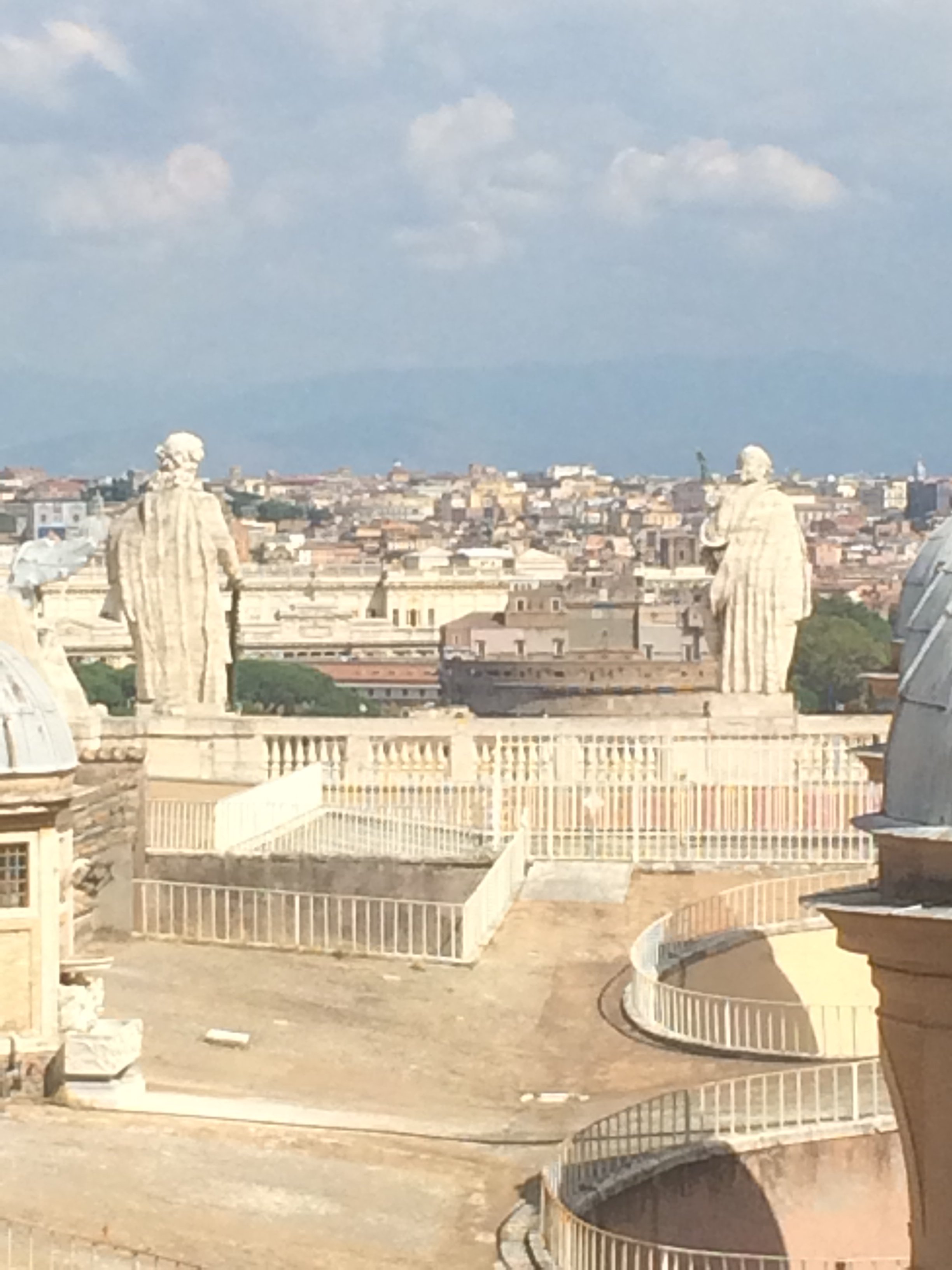
From atop the Vatican—deep remnants of Christendom
Over the next four years my dreams for my career as a pastor were coming true. As I said in my previous post, one of the marks of Christendom is that pastors were often expected to and assumed they would have a church pulpit and a community pulpit. Christendom is basically the name for the reality where there is so much homogeneity between the Christian Church and society that pastors were able to easily float between the two effortlessly (this was before our culture got nervous about churches imposing their Christian values on society).
Over a four-year period, I watched as my community pulpit matched my church pulpit, the two mutually reinforcing each other. In a short period of time I became the co-chair of the East Portland Action Plan, a 30-year visioning group under the then current mayor, became a commissioner on the Portland Charter Commission as we rewrote the city charter, became an alternate county commissioner in the case of an emergency vacancy and was nominated for the Portland Peace Price. All of this happened because Eastminster Church said, “Get out there and serve the community on behalf of us.”

But, this all came to an end in 2012 and this is the reason I share this. I was serving a church that was dangerously close to closing. The truth is the church did close in 2012, but not before turning over half of their building to a family homeless shelter, putting in a one-acre community garden that largely served the immigrant population of East Portland, and partnering with another congregation who could take over the building and carry on those community missions. Eastminster members folded into the larger church creating a new and revitalized congregation.

This was all really good work and probably the ministry of which I am most proud. But in order to make the partnership work with the other congregation one of the two of us pastors would need to bow out. It was clear that it was me as my little congregation was folding into their larger congregation. My congregation wanted to hold onto me, but I needed to model the letting go that my congregation would need to adopt for this merge of churches to work. Any holding on by me or my congregation would have doomed the project.
I share this with you because this experience exposed the crack in Christendom. For a brief time I was able to enjoy both a community pulpit and a church pulpit—what I had always dreamed of when I entered seminary two decades prior. But Christendom is built on two things—a stable and strong institutional church and a mutuality between a church’s Christian values and the community’s values.
American Christendom began fracturing in the 1960’s, but for a short four-year period I got a taste of what Christendom felt like—I was both a church leader and a community leader. But this brief professional dream job was built on a church putting in place its legacy. To be faithful to the work of legacy also meant to let go of this ideal role I had always dreamed of.
There was already a crack in Christendom. I just was able to cheat it for one very short four-year period.
More to come in Part 2.