
Rome to Rumi: Why Trump Now?

I am sitting here preparing to write my first lines to a book I imagine titllng Rome to Rumi: Recovering the Mystical Tradition from Christendom. Not ten miles from me ICE (Immigration Custom Enforcement) officers are terrorizing the Minneapolis-St. Paul Metropolitan area. When I first imagined writing this book I believed that it was mostly for mainline Protestant churches as they wrestled with the historic decline of their churches over the last six decades. I imagined that I would paint a picture of the spiritual values and spiritual practices of an emerging demographic who often call themselves “spiritual but not religious.” As a professional minister my focus has largely been on the challenges, presence and impact of the institutional church.

But, the terrifying circumstances of the last eight years with the election of Donald J. Trump, the January 6, 2021 insurrection in the nation’s capital and the radical attempt to overthrow our constitutional norms in the past year tells me that this isn’t just about addressing the monumental shifts in church membership and practice. This is about living through the last desperate gasps of Christendom, less a phenomenon limited to religious communities and more a cultural and political reality shared by all Americans.
I got my first taste of the slow dissolving away of Christendom as a preaching pastor. I served more than three decades in the Presbyterian Church (USA) preaching nearly every Sunday over that three-decade span. I grew up in the Presbyterian Church and I remember very clearly how preachers were not just employees of a particular church. They were community voices. They may have worked in a particular church, but the role far exceeded the demands associated with the members of that church.
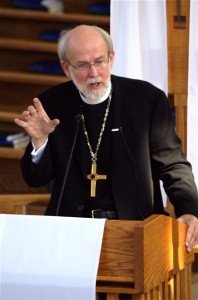
When I first became a preaching pastor after seminary I enjoyed the privileges of Christendom even though I had never heard the term before. I had a sense, and my conversations with members proved it, that what I said on Sunday was often the topic “around the water coolers” on Monday. Although more likely I heard such comments as “we were talking at our bridge group about what you said on Sunday” or “I told my grown children what you said on Sunday and we had a revealing conversation about it.”
I will go into this more as I continue to write, but the point is that in Christendom there was a certain language shared by the community even if all people didn’t go to the same church or go to church at all. In Christendom the preacher or the pulpit acted as sort of the “conscience of the community” and nearly everyone accepted that. In the 90’s the community where I was serving still had a column for religious professionals in the local paper. Every week a minister would be featured in this “Clergy Speaks” column and over a three-year period I wrote about two dozen pieces. This was Christendom. I had both a church pulpit and a community pulpit and it didn’t seem odd to anyone.
I don’t know exactly when it happened, but over the years I could feel a shift. When I first began serving as a minister and a preacher I felt like the members were financially supporting the pulpit to serve as the conscience for the community. But mainline Protestant churches have been in decline since the late 1960’s. While there didn’t seem to be much concern about the decline in the early years, by the early 1990’s churches increasingly shifted more of their focus on retaining membership. Preachers could say just about anything from the pulpit as long as it didn’t risk the loss of members.
This is not a complaint. This is a reality of churches and people trying to hold onto something we call Christendom. That is, a culture of Christians who got used to having power and influence that over-represented their actual demographic reality. In 1970, over 90% of American’s considered themselves Christian. In 2024 that number had slipped to less than 65%. But rather than adjust to this new multicultural, multi-religious reality most churches and much of American society has been trying to recapture a past where Christians and a Christian culture were the unquestioned norm.
The reality is one world is dissolving away while another world has not yet been born.. We live in an in-between time.
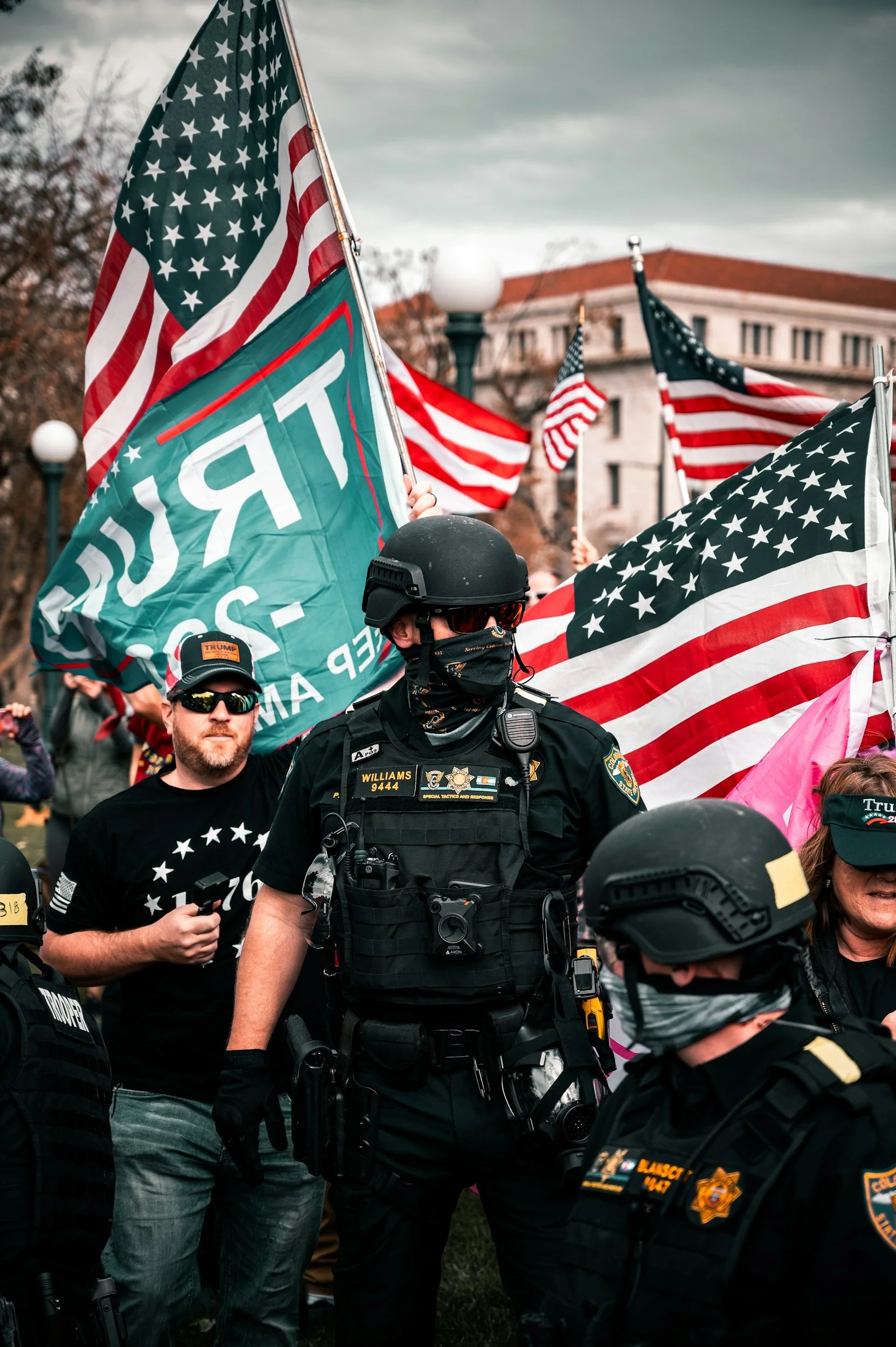
So…..it is no surprise that Christian nationalism is trying to fill the vacuum and Donald J. Trump is taking advantage of this historic opportunity when one world is collapsing before another world has formed to take its place. This book Rome to Rumi: Recovering the Mystical Tradition from Christendom is an attempt to paint a picture of the religious, cultural and political world that is collapsing beneath us and hint at what might be coming in the future.