
The Reluctant Prophet: Are all Welcome?
Reader Bob responded to my “Theology of Presence” blog commenting that what the church needs most is a “theology of belonging” more than a “theology of presence.” It gave me a chance to clarify my adoption of a theology of presence while also validating his comment.

Photo by Matheus Ferrero@mattheusferrero
My theology of presence largely emerged form the question, “How can I be a religious and spiritual leader in a way that allows me to show up fully and authentically to the broad diversity of people I work with and encounter?” In many ways I have adopted a chaplain’s approach to showing up. I think you know what I mean. Hospital chaplains know how to move from one hospital room to another being equally present to each patient and family no matter their beliefs, their values and their character.
I also have adopted a theology of presence as it provides the lens I need in order to show up for myself and encounter the sacred in my surroundings, both social and natural.
Having said that, Reader Bob’s comment about a “theology of belonging” resonated with me immediately and revealed one of the limitations I discovered in my years of ministry. In my Presbyterian denomination I have watched as the vast majority of our churches have adopted or promoted some version of the “All Are Welcome” language either in their bulletins, on their street signs or on their websites. This is true of most progressive mainline denominations as well.
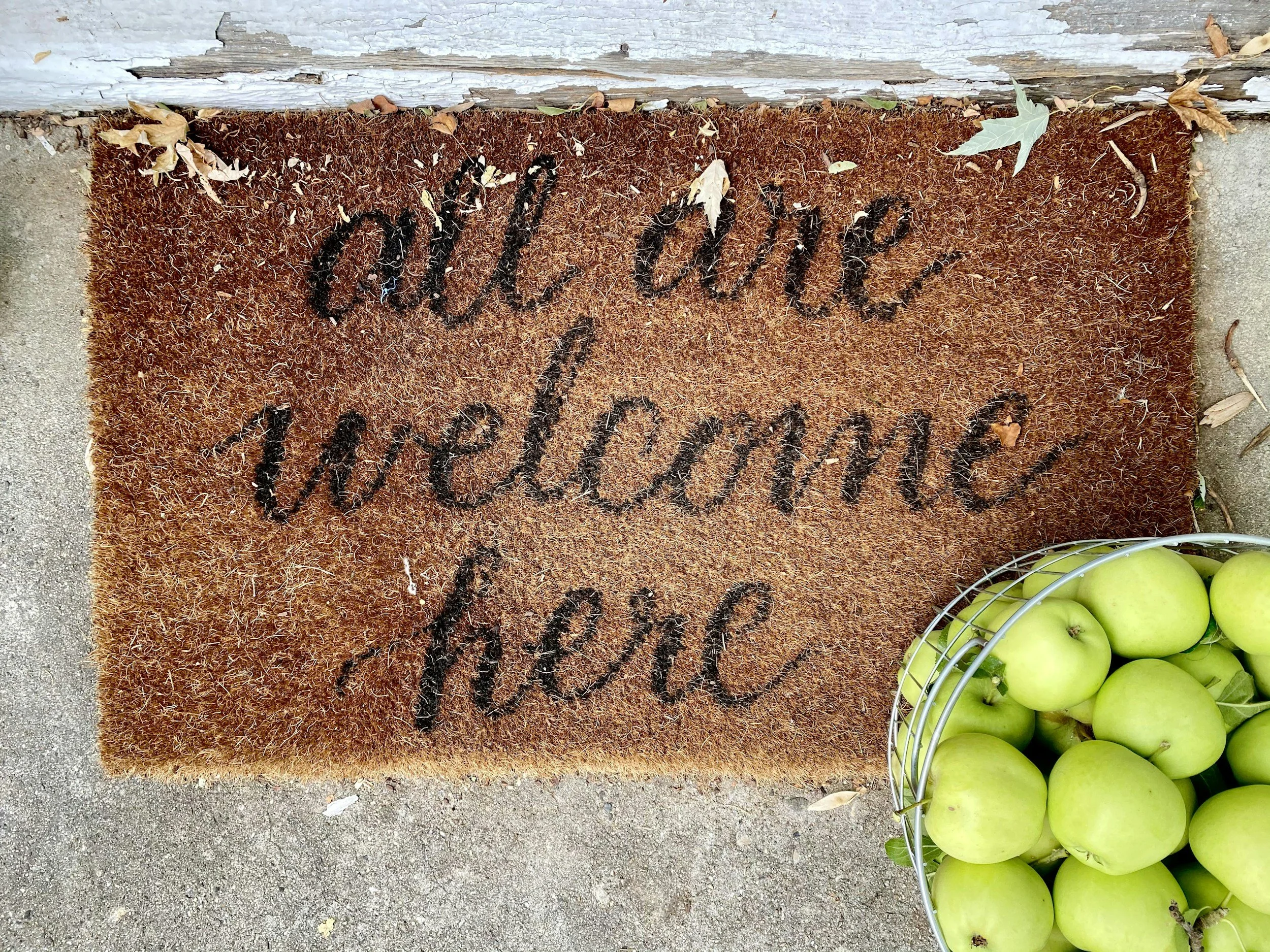
LeeAnn Cline@leeanneva
I do appreciate this, I really do. But I don’t think it gets to Reader Bob’s theology of belonging. First, think about it. Why do churches feel the need to even say, “All are Welcome”? Target doesn’t say it. Major sports arenas don’t say it. Grocery stores don’t say it. The dog grooming shop doesn’t say it. Why do churches feel the need to say it? Because we have a history of either being unwelcoming or, at the least, being perceived as unwelcoming. The “All Are Welcome” language these days is often code for being LGBTQIA+ friendly. If that isn’t there, the person off the street will likely wonder if this church is “gay friendly.”
But there is a bigger issue that is baked into our church cultures. I do appreciate the “All Are Welcome” language and signs. But honestly, this language has a subtext that congregations themselves are not aware of. The subtext can be found in these lines:
All are welcome…to come in and worship like we worship.
All are welcome…to recite the prayers that we recite and believe what we believe.
All are welcome…to sing the hymns that we love to sing.
All are welcome…to volunteer and serve the community the way we serve the community.
All are welcome…to learn and grow in the educational forms that we prefer for learning and growing.
All are welcome…to express themselves in the ways that we like to express ourselves.
This is where I love Reader Bob’s theology of belonging. A theology of belonging assumes relationships of mutuality. And mutuality requires change and transformation by both parties. If you are in a church, ask yourself how far your welcome extends:
Photo by Franck V@possessedphotography
What if one group of people is more inspired by dialogical sharing rather than by preaching
What if another group of people see Jesus as one of many historic spiritual leaders rather than the one universal Savior?
What if people like to raise their hands and dance in the aisles rather than the more subdued reverent style of most mainline congregations?
What if some participants only showed up for potlucks and never put a dime in the plate?
What if people liked the fellowship of the congregation, but didn’t care for the rituals of baptism and Communion?
I am so glad that congregations are trying to challenge the perception that churches are unwelcoming. That is good news. But to truly embody a theology of belonging, the church of the future will not only need to welcome people to do things the way they do them. They will also need to welcome the changes that automatically come from falling in love with people who worship, learn, connect and serve in ways unfamiliar to them.
Questions for the Dialogue (go to the “original post” link and comment in the comment box at the bottom):
If you are involved in a church, how far do you think the “All are Welcome” applies?
If you are not involved in a church and see a church sign that says, “All are Welcome” what message do you hear?